
The seminar within the framework of the Council of Europe Cultural Route
On 17–18 November 2025, the Council Hall of the Municipality of Torregrotta hosted the third edition of the International Seminar “The Hygeia Legacy”, dedicated this year to the theme “The Heritage of Medicinal Plants and Sustainable Rural Entrepreneurship for Young Europeans.” The event was promoted by the Aromas Itinerarium Salutis Association (AIS) within the framework of the European Route of Historic Pharmacies and Medicinal Gardens, certified as a Cultural Route of the Council of Europe since 2024.
The seminar brought together researchers, heritage professionals, young entrepreneurs and artists from several European countries, with the aim of exploring the role of medicinal plants and materia medica in contemporary dynamics linked to sustainable development and emerging rural economies.
Following the institutional greetings by the Mayor of Torregrotta, Dr Antonino Caselli, and AIS Director Prof. Maria Luisa Vázquez de Ágredos Pascual, Senator Barbara Floridia addressed the audience, emphasising the strategic value of initiatives capable of connecting heritage, research and territorial development. The sessions, held in Italian and English, were moderated by AIS Executive Secretary Dr Simona Tardi and by the Councillor for Culture and Tourism of Torregrotta, Giuseppe Pandolfo.

Scientific sessions: medicinal plants, materia medica and territories
The scientific sessions followed a clear guiding thread: illustrating how the heritage of medicinal plants and materia medica can translate into knowledge, well-being and new opportunities for territorial development.
Contributions by speakers from academia, cultural institutions, rural enterprises and the health sector highlighted both the richness and diversity of perspectives, as well as the deep interconnections that link them.
Among the topics addressed were the building of more cohesive communities through cultural and health networks, governance for sustainable tourism, the recovery and enhancement of agricultural landscapes, innovative models of agriculture attentive to sustainability and experiential education, and the European history and memory of citrus cultivation — in a symbolic moment coinciding with the 25th anniversary of the European Landscape Convention of the Council of Europe (Florence, 20 October 2000).
From this mosaic emerged an intergenerational and interdisciplinary dialogue between research, heritage and local development, identifying younger generations as key actors for the future of the Route.


Art, sensory experiences and creativity as an extension of research
Complementing the in-room sessions, the programme included thematic visits, sensory experiences and artistic performances inspired by the heritage of materia medica, including two particularly significant artistic moments. The performance “La Frutta che scherza” by Carles Tarrassó guided participants through a sensory journey capable of connecting “emotion, concept and experience” (C. Tarrassó).

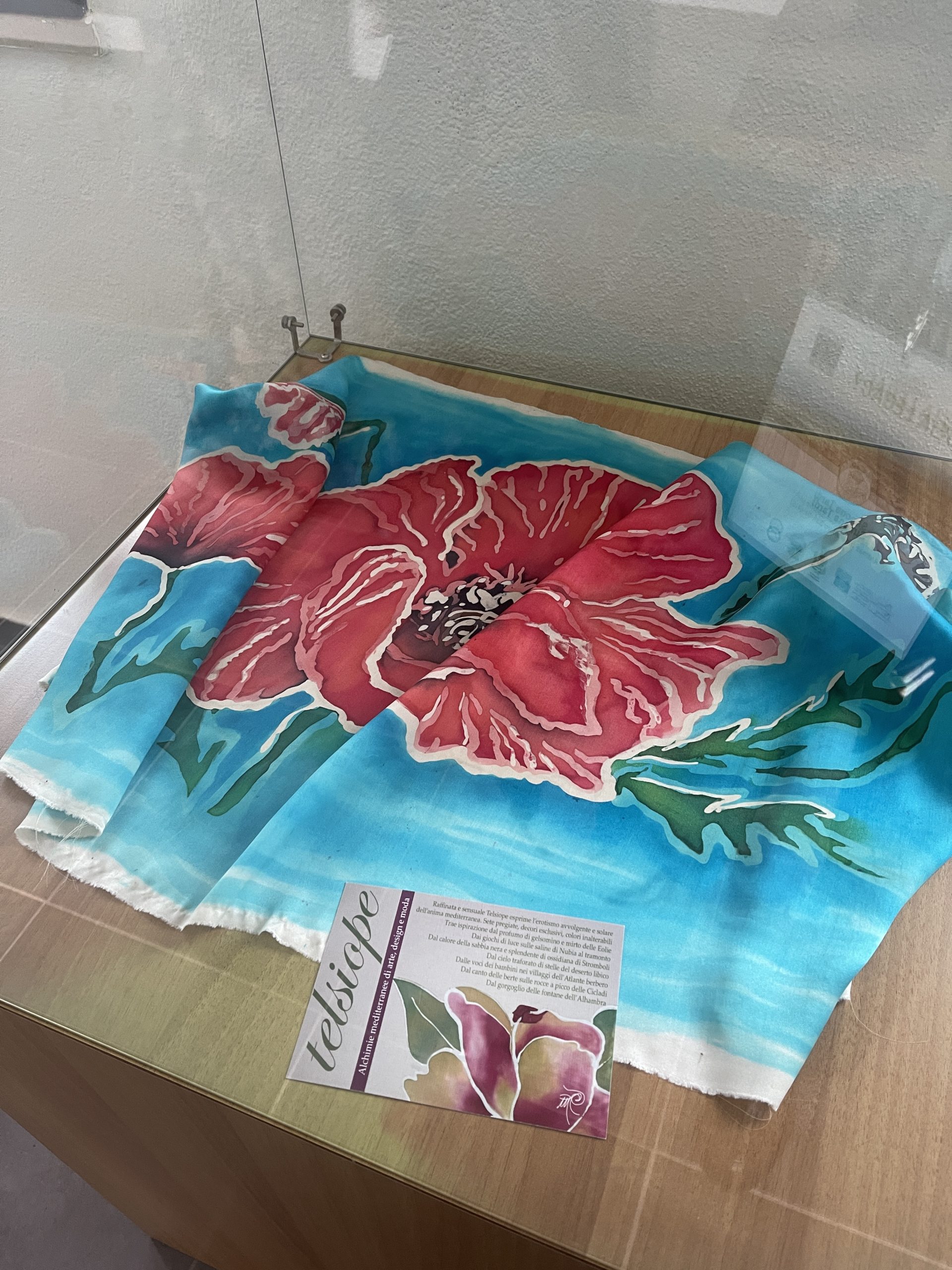
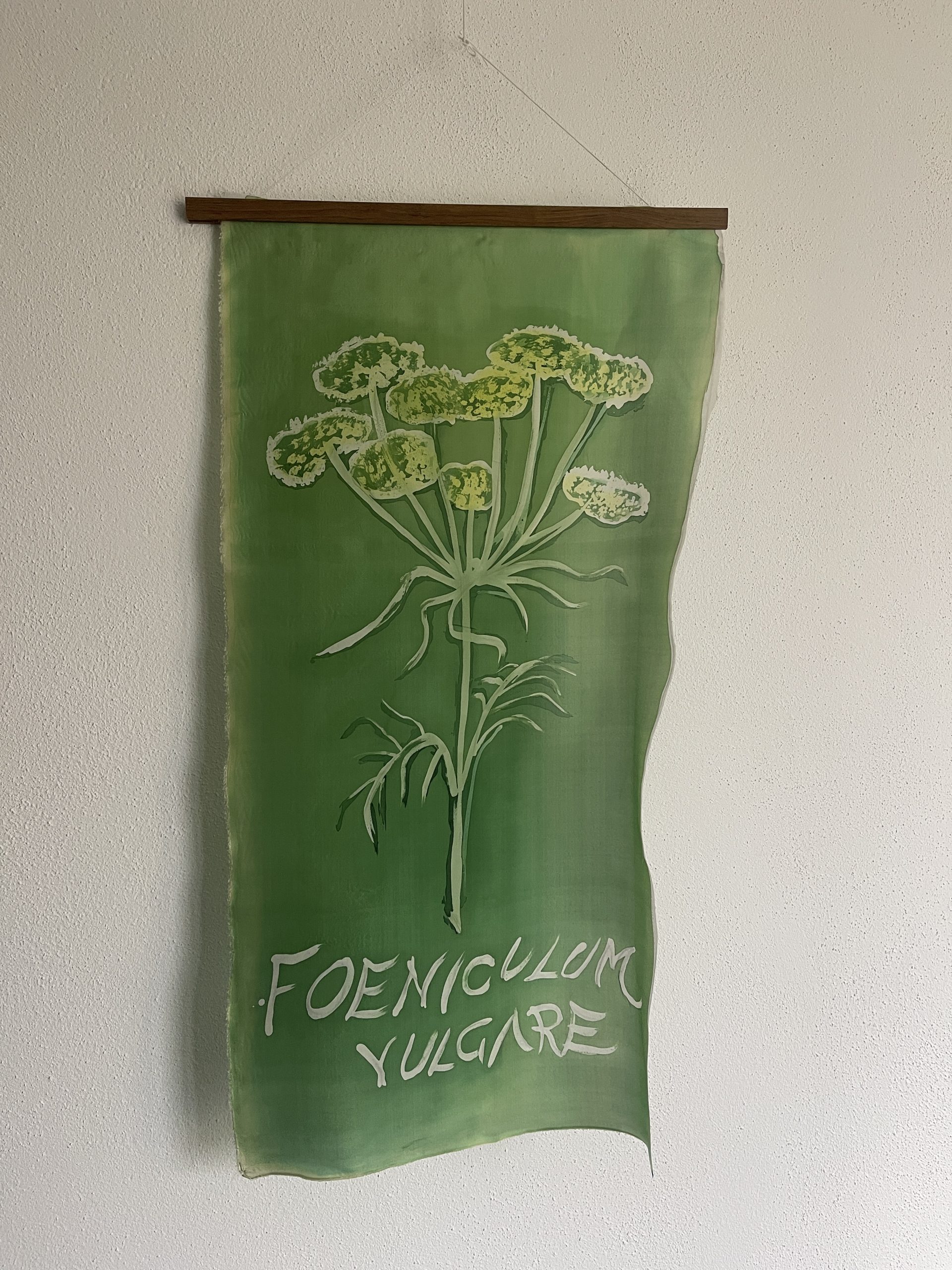
In parallel, the exhibition “Sete Artistiche per Aromas” by the collective Telsiope paid tribute to the phytotherapeutic biodiversity of the Peloritani Mountains through hand-painted silks produced with the ancient wax-resist technique, creating a poetic bridge between art, botany and historical memory.



Within the framework of the experiential activities, the programme included a live demonstration on the preparation of Sicilian cannoli, curated by Vincenzo Gitto, who guided participants through the traditional techniques behind one of the island’s most emblematic desserts. This highly appreciated moment reaffirmed the close connection between cuisine and materia medica, showing how gastronomic traditions preserve knowledge related to the use of medicinal plants and practices of well-being.
This experiential and creative dimension fostered a direct encounter with landscape, agricultural practices and local memory, demonstrating how the history of historic pharmacies, medicinal gardens and materia medica can generate educational, creative and responsible cultural tourism pathways.


Torregrotta and the Niceto Valley itinerary
Within this broader vision, the seminar included visits to Roccavaldina, Valdina, Monforte San Giorgio and Messina, featuring key sites such as the Historic Pharmacy of SS. Sacramento, the “Pietro Castelli” Botanical Garden of the University of Messina, the Municipal Social Centre of Torregrotta, the herbal trail at Il Poggio del Tempo Perduto, and the Diffused Museum of Monforte.
The Niceto Valley itinerary gave voice to AIS themes through local history, landscape and identity and, during Hygeia 2025, emerged as an example of good practice at European level: a living and sustainable territorial network supported by cooperation among local administrations, academic institutions, cultural and natural heritage sites (museums, gardens and historic pharmacies) and small and medium-sized enterprises.


In this context, the Municipality of Torregrotta and the Torregrotta Comprehensive School presented their candidacies to AIS — a step that reaffirms the community’s alignment with the values promoted by a Cultural Route of the Council of Europe such as the European Route of Historic Pharmacies and Medicinal Gardens (Aromas Itinerarium Salutis). This commitment looks to the future, aspiring to stimulate new joint initiatives and to support territorial development processes attentive to sustainability, memory, landscape and community well-being.

Sicily in network: Hygeia 2025 and the dialogue with the Council of Europe Cultural Routes
Sicily has long emerged as one of the Mediterranean crossroads within the system of the Council of Europe’s Cultural Routes, thanks to its geographical position, its rich cultural and natural heritage, and a constellation of sites where arts, crafts, landscapes and historical trade routes intersect.
The island is already part of certified routes such as the Phoenicians’ Route and Iter Vitis – Les Chemins de la Vigne, while also offering fertile ground for future synergies with routes still in development — such as the citrus-themed proposal presented at Hygeia 2025 — which highlights one of the Mediterranean’s most distinctive cultural matrices and a thematic axis particularly aligned with the European Route of Historic Pharmacies and Medicinal Gardens.
Within this perspective lies the ongoing study — presented at Hygeia 2025 — by Dr Costanzo on the Cultural Routes of the Council of Europe crossing Sicily. Her research provides valuable tools for understanding how the various cultural networks active on the island may collaborate and reinforce one another, identifying potential points of convergence between pharmaceutical heritage, materia medica, agricultural landscapes and cultural mobility circuits.
In this context, The Hygeia Legacy 2025 not only further illuminated Sicily’s potential within the Cultural Routes framework, but also opened the way for new regional initiatives aiming at the development of a Sicilian route dedicated to historic pharmacies and medicinal gardens, within the international framework coordinated by AIS.

Photo credits: Ph. Gianpiero Panarello & AIS.

Aromas Itinerarium Salutis celebrates International Museum Day 2026 with the video ‘One route, many voices’

XIV Pharmaceutical Conference Illa del Rei: heritage, science and sensory experiences in Menorca

From Apicius to Vermouth: Plants, Gastronomy and Wine as a Living Heritage

Huelva 2026: 5th Meeting of Cultural Route of the Council of Europe Managers in Spain concludes

Aromas Itinerarium Salutis at the 5th Meeting of Cultural Route Managers of the Council of Europe in Spain

Discover Pharmacy Museums – 5th Edition “One route, many voices”

La Nau awarded the European Heritage Label: founding site of the Cultural Route of the Council of Europe “Aromas Itinerarium Salutis”

Pharmacy objects and European heritage: Call for Papers now open for the 2nd AIS Annual Forum 2026

Unveiling Ceremony of the Aromas Itinerarium Salutis Plaque at the Arboretum du Mas Roussillon
